
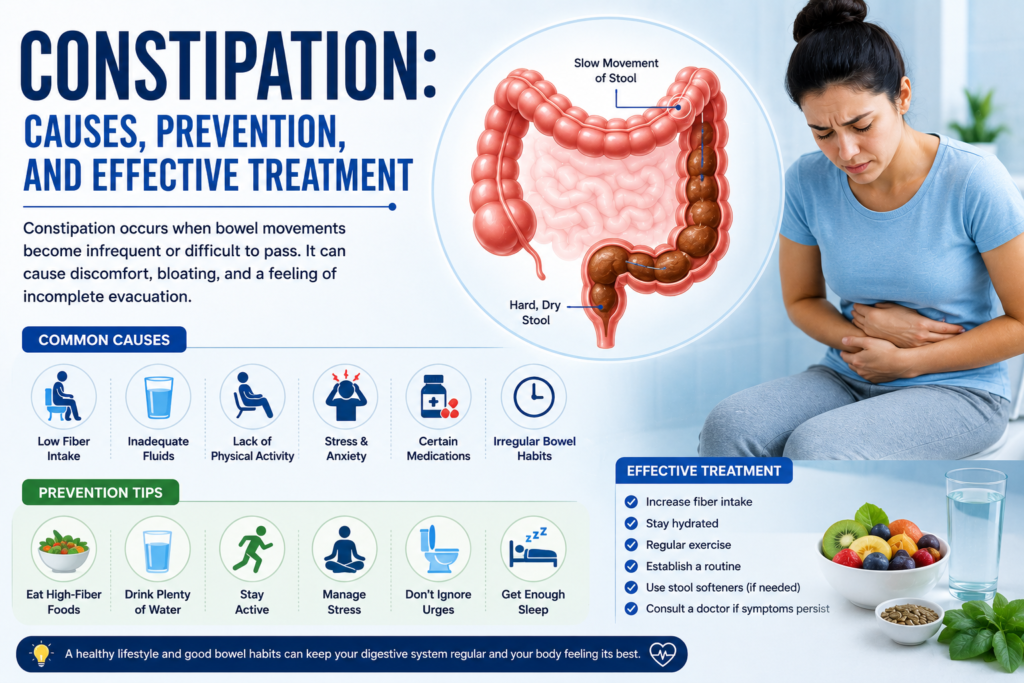
Constipation is one of the most common digestive concerns affecting people of all ages. While occasional constipation is usually not a serious problem, persistent difficulty passing stools can cause discomfort, affect daily activities, and reduce overall quality of life.
Many individuals experience constipation due to lifestyle factors such as poor dietary habits, inadequate hydration, lack of physical activity, or changes in routine. In some cases, constipation may also be linked to underlying medical conditions.
Understanding the causes, warning signs, and available constipation treatment options can help individuals manage symptoms effectively and support long-term digestive health.
This guide explains everything you need to know about constipation, including prevention strategies and healthy habits that promote regular bowel function.
What Is Constipation?
Constipation is a digestive condition characterized by infrequent bowel movements or difficulty passing stools.
Although bowel habits vary from person to person, constipation is generally associated with:
- Fewer bowel movements than usual
- Hard or dry stools
- Straining during bowel movements
- A feeling of incomplete emptying
Some individuals may experience occasional episodes, while others may struggle with chronic constipation that persists for weeks or longer.
Constipation is a symptom rather than a disease itself and may result from multiple contributing factors.
How the Digestive System Works
The digestive system processes food, absorbs nutrients, and eliminates waste.
As food moves through the intestines, water is absorbed from the remaining waste material. If stool moves too slowly through the colon, excessive water may be absorbed, causing stools to become hard and difficult to pass.
This process is one of the primary mechanisms behind constipation.
Common Causes
Several lifestyle and health-related factors can contribute to constipation.
Low Fiber Intake
Fiber plays a key role in maintaining healthy bowel movements.
Diets lacking sufficient fiber may increase the likelihood of constipation.
Fiber helps:
- Add bulk to stools
- Promote regular bowel movements
- Support digestive health
Inadequate Hydration
Water helps soften stool and supports normal bowel function.
Insufficient fluid intake can contribute to hard, dry stools that are more difficult to pass.
Lack of Physical Activity
Regular movement helps stimulate intestinal activity.
A sedentary lifestyle may slow digestive function and increase constipation risk.
Changes in Daily Routine
Travel, schedule disruptions, and lifestyle changes can sometimes affect bowel habits.
Many individuals experience temporary constipation during periods of routine change.
Ignoring the Urge to Have a Bowel Movement
Delaying bowel movements repeatedly may contribute to constipation over time.
Responding promptly to natural urges supports healthy digestive function.
Certain Medications
Some medications may affect bowel function and contribute to constipation in susceptible individuals.
Hormonal and Medical Conditions
Various health conditions may influence digestive activity and bowel regularity.
Healthcare providers can help determine whether underlying medical issues are contributing to symptoms.
Warning Signs
Occasional constipation is common, but certain symptoms may warrant medical attention.
Persistent Difficulty Passing Stools
Constipation that continues for an extended period should be evaluated.
Excessive Straining
Frequent or severe straining may indicate an underlying issue requiring attention.
Hard, Dry Stools
Consistently hard stools often suggest inadequate hydration or dietary fiber intake.
Abdominal Discomfort
Constipation may cause:
- Cramping
- Bloating
- Feelings of fullness
Sensation of Incomplete Emptying
Many individuals report feeling that bowel movements are incomplete.
Significant Changes in Bowel Habits
Any major or unexplained change in bowel patterns should be discussed with a healthcare professional.
How Constipation Affects Daily Life
Although often viewed as a minor issue, chronic constipation can have a significant impact on quality of life.
Individuals may experience:
- Reduced comfort
- Decreased productivity
- Sleep disturbances
- Emotional stress
- Social discomfort
Addressing symptoms early may help prevent ongoing complications.
Dietary Recommendations
Nutrition plays a major role in digestive health and bowel regularity.
Making appropriate dietary adjustments is often one of the most effective ways to improve symptoms.
Increase Fiber Intake
Fiber-rich foods help support healthy bowel movements.
Examples include:
Fruits
- Apples
- Pears
- Berries
- Oranges
Vegetables
- Broccoli
- Carrots
- Spinach
- Green beans
Whole Grains
- Oats
- Brown rice
- Whole wheat products
Legumes
- Lentils
- Chickpeas
- Beans
Increasing fiber gradually may help reduce digestive discomfort.
Stay Hydrated
Adequate hydration supports healthy stool consistency.
Water is generally the best choice for maintaining hydration.
Individuals who increase fiber intake should also ensure sufficient fluid consumption.
Eat Regular Meals
Consistent meal timing may help support normal digestive function.
Skipping meals or irregular eating patterns can sometimes affect bowel habits.
Treatment Options
The primary goal of constipation treatment is to restore comfortable and regular bowel movements while addressing contributing factors.
Treatment plans vary depending on symptom severity, duration, and underlying causes.
Lifestyle Modifications
Healthy lifestyle habits often form the foundation of constipation management.
These may include:
- Increasing physical activity
- Improving hydration
- Consuming more dietary fiber
- Establishing regular bathroom routines
Dietary Adjustments
Nutritional changes are among the most effective strategies for improving bowel regularity.
A balanced diet rich in fiber supports long-term digestive health.
Medical Evaluation
Individuals with persistent or severe symptoms should seek professional medical assessment.
Healthcare providers can identify potential underlying causes and recommend appropriate management strategies.
Prevention Tips
Preventing constipation often involves adopting healthy daily habits.
Consume Adequate Fiber
Aim to include a variety of fiber-rich foods throughout the day.
Drink Enough Water
Hydration supports healthy digestion and stool consistency.
Stay Physically Active
Regular exercise encourages healthy intestinal movement.
Even simple activities such as walking can be beneficial.
Respond to Natural Urges
Avoid delaying bowel movements when possible.
Listening to the body’s signals helps maintain regularity.
Maintain a Consistent Routine
Regular meal schedules and healthy daily habits support digestive wellness.
Manage Stress
Stress can affect many aspects of digestive function.
Relaxation techniques may help promote overall digestive health.
When Should You See a Doctor?
Consult a healthcare professional if you experience:
- Persistent constipation
- Severe abdominal pain
- Significant changes in bowel habits
- Unexplained weight loss
- Symptoms that interfere with daily life
Early evaluation helps identify potential causes and ensure appropriate care.
FAQs
Gut health refers to the proper functioning and balance of the digestive system and its microorganisms.
A balanced diet, regular exercise, adequate hydration, quality sleep, and stress management can help support digestive health.
Fruits, vegetables, whole grains, legumes, fermented foods, nuts, and seeds are commonly associated with healthy digestion.
Probiotics are beneficial microorganisms that may help support microbial balance within the digestive tract.
Prebiotics provide nourishment for beneficial gut bacteria and help maintain a healthy digestive environment.