Vaginal Infections in Women: Symptoms, Prevention, and Treatment
Vaginal health plays a crucial role in a woman’s overall well-being, yet it is often overlooked until discomfort or symptoms arise. Vaginal infections are among the most common gynecological concerns affecting women of all ages. While many infections are not serious when diagnosed and treated early, ignoring symptoms can lead to complications and affect quality of life.
Many women experience itching, unusual discharge, irritation, or discomfort at some point in their lives. These symptoms may indicate a vaginal infection, which can occur due to bacterial imbalance, fungal overgrowth, or other underlying causes.
Understanding the causes, symptoms, prevention strategies, and available vaginal infection treatment options can help women take proactive steps toward maintaining intimate health and preventing recurring infections.
In this comprehensive guide, we will discuss everything women need to know about vaginal infections and how to manage them effectively.
What Is a Vaginal Infection?
A vaginal infection occurs when the natural balance of microorganisms within the vagina is disrupted. The vagina normally contains beneficial bacteria that help maintain a healthy environment and protect against harmful microbes.
When this balance is disturbed, harmful bacteria, fungi, or other microorganisms can multiply, leading to infection and uncomfortable symptoms.
Vaginal infections are extremely common and can affect women regardless of age, lifestyle, or reproductive status.
Understanding the Vaginal Microbiome
The vagina contains naturally occurring bacteria that help maintain an acidic environment. This balance protects against infection and supports reproductive health.
Several factors can disrupt this delicate ecosystem, including:
- Hormonal changes
- Poor hygiene practices
- Certain medications
- Unprotected sexual activity
- Medical conditions affecting immunity
Maintaining a healthy vaginal microbiome is essential for preventing infections and supporting overall intimate wellness.
Common Types of Vaginal Infections
Different types of vaginal infections may present with similar symptoms but have different causes.
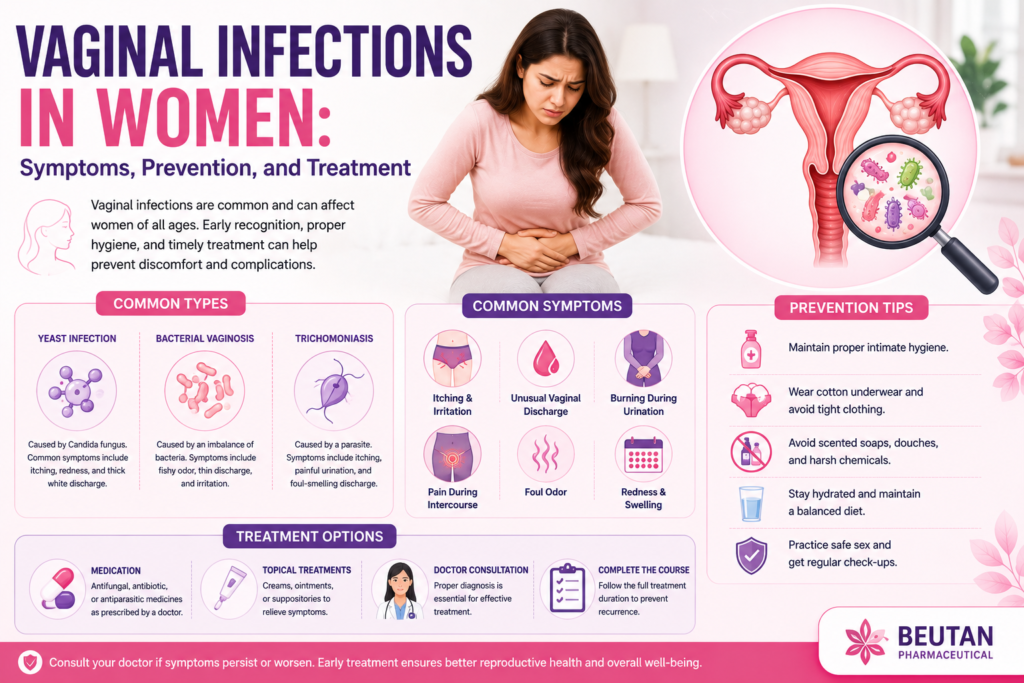
- Yeast Infection
Yeast infections occur when naturally occurring fungi grow excessively within the vagina.
Common characteristics include:
- Intense itching
- Burning sensation
- Thick white discharge
- Redness and irritation
Yeast infections are among the most frequently diagnosed vaginal infections.
- Bacterial Vaginosis
Bacterial vaginosis occurs when harmful bacteria outnumber beneficial bacteria in the vaginal environment.
Symptoms may include:
- Thin discharge
- Unpleasant odor
- Mild irritation
- Vaginal discomfort
Some women may not experience noticeable symptoms.
- Trichomoniasis
Trichomoniasis is an infection caused by a microscopic parasite.
Possible symptoms include:
- Vaginal irritation
- Abnormal discharge
- Burning during urination
- Discomfort during intercourse
In some cases, symptoms may be mild or absent.
- Non-Infectious Vaginitis
Not all vaginal irritation results from infection.
Certain products can trigger inflammation, including:
- Scented soaps
- Feminine hygiene sprays
- Detergents
- Chemical irritants
This type of irritation may produce symptoms similar to those of an infection.
Common Symptoms of Vaginal Infections
Symptoms vary depending on the underlying cause but often include:
Unusual Vaginal Discharge
Changes in discharge may involve:
- Increased quantity
- Altered color
- Different consistency
- Unpleasant odor
Changes in discharge are often among the earliest warning signs.
Vaginal Itching
Persistent itching around the vaginal area may indicate infection or irritation.
The severity can range from mild discomfort to significant irritation.
Burning Sensation
Women may experience:
- Burning during urination
- Vaginal burning
- Irritation during daily activities
This symptom often accompanies inflammation.
Redness and Swelling
Inflammation can lead to visible redness and tenderness around the vaginal tissues.
Pelvic Discomfort
Some infections may cause mild pelvic discomfort or pressure.
Pain During Intimacy
Vaginal irritation and inflammation can make sexual activity uncomfortable.
What Causes Vaginal Infections?
Several factors can contribute to the development of vaginal infections.
Hormonal Changes
Hormone fluctuations can affect the vaginal environment.
Common situations include:
- Pregnancy
- Menopause
- Menstrual cycle changes
- Hormonal therapies
Changes in hormone levels can alter the balance of protective bacteria.
Antibiotic Use
While antibiotics help treat bacterial infections, they may also reduce beneficial vaginal bacteria.
This disruption can increase the likelihood of developing a yeast infection.
Poor Intimate Hygiene
Inadequate hygiene practices may allow harmful microorganisms to multiply.
At the same time, excessive cleaning or aggressive products can also disturb the natural balance.
Maintaining appropriate hygiene is important for vaginal health.
Uncontrolled Blood Sugar Levels
Women with poorly controlled diabetes may be more prone to recurrent vaginal infections.
Elevated blood sugar levels can encourage microbial growth.
Weakened Immune System
The immune system plays an important role in protecting against infections.
A weakened immune response may increase susceptibility.
Tight and Non-Breathable Clothing
Wearing tight clothing for extended periods may create warm and moist conditions that encourage microbial growth.
Choosing breathable fabrics may help reduce risk.
Risk Factors for Vaginal Infections
Certain factors may increase the likelihood of developing vaginal infections.
Pregnancy
Hormonal changes during pregnancy can alter vaginal conditions.
Diabetes
Poorly managed diabetes increases infection risk.
Hormonal Fluctuations
Significant hormonal shifts can affect vaginal balance.
Certain Medications
Some medications may alter the natural vaginal environment.
Stress
Chronic stress can weaken immune defenses and affect overall health.
Potential Complications of Untreated Vaginal Infections
Although many vaginal infections are manageable, untreated infections can sometimes lead to complications.
Possible concerns include:
- Chronic discomfort
- Recurrent infections
- Pelvic health complications
- Increased susceptibility to additional infections
Early diagnosis and treatment are important for preventing long-term issues.
Diagnosis of Vaginal Infections
Accurate diagnosis helps determine the appropriate treatment approach.
Medical History
A healthcare provider may ask about:
- Symptoms
- Duration of discomfort
- Medical history
- Recent medication use
Physical Examination
A gynecological examination may help identify signs of infection or inflammation.
Laboratory Testing
Testing may involve evaluation of vaginal discharge to determine the underlying cause.
Laboratory analysis helps distinguish between bacterial, fungal, and other infections.
Vaginal Infection Treatment: Available Management Options
The most effective vaginal infection treatment depends on the type and cause of the infection.
Accurate diagnosis is essential because treatments vary according to the underlying condition.
Professional Medical Care
Healthcare professionals develop treatment plans based on:
- Infection type
- Symptom severity
- Medical history
- Pregnancy status
- Overall health condition
Seeking professional advice helps ensure appropriate management.
Managing Symptoms
Women may benefit from supportive measures such as:
- Maintaining good hygiene
- Avoiding irritants
- Wearing breathable clothing
- Following medical recommendations
These steps can help reduce discomfort and support recovery.
Preventing Recurrent Infections
For women who experience recurring infections, healthcare providers may recommend strategies aimed at restoring and maintaining vaginal balance.
Long-term management focuses on addressing contributing factors and preventing future episodes.
Home Care Measures for Comfort
Certain self-care practices may help improve comfort during recovery.
Wear Cotton Underwear
Breathable fabrics help reduce moisture buildup.
Avoid Scented Products
Avoid products that may irritate sensitive tissues.
Maintain Proper Hygiene
Gentle cleansing practices support vaginal health.
Stay Hydrated
Adequate hydration supports overall wellness and recovery.
Prevention Tips for Vaginal Infections
Preventive care is one of the most effective ways to support intimate health.
Practice Good Hygiene
Maintain regular but gentle hygiene habits.
Avoid Harsh Chemicals
Choose mild, fragrance-free personal care products.
Wear Breathable Clothing
Cotton underwear and loose-fitting garments can promote airflow.
Manage Blood Sugar Levels
Women with diabetes should follow healthcare guidance for blood sugar control.
Maintain a Healthy Lifestyle
Healthy habits support immune function and overall well-being.
These include:
- Balanced nutrition
- Regular exercise
- Adequate sleep
- Stress management
Vaginal Health During Pregnancy
Pregnancy brings significant hormonal changes that can affect vaginal health.
Pregnant women should promptly report symptoms such as:
- Unusual discharge
- Itching
- Burning
- Odor changes
Early medical evaluation helps protect both maternal and fetal health.
When Should You See a Gynecologist?
Women should seek medical attention if they experience:
- Persistent itching
- Unusual discharge
- Strong vaginal odor
- Burning during urination
- Pain during intimacy
- Recurring infections
- Symptoms that do not improve
Prompt evaluation allows for accurate diagnosis and appropriate care.
Supporting Long-Term Vaginal Health
Maintaining vaginal health is an ongoing process.
Key habits include:
- Regular gynecological checkups
- Healthy lifestyle choices
- Awareness of symptoms
- Timely medical consultation when concerns arise
Women who understand their bodies are often better equipped to identify changes and seek care when needed.
FAQs
Yeast infections and bacterial vaginosis are among the most common vaginal infections affecting women.
Some mild cases may improve, but persistent symptoms should always be evaluated by a healthcare professional.
Common signs include itching, unusual discharge, burning, irritation, redness, and unpleasant odor.
Both inadequate hygiene and excessive use of harsh hygiene products may disrupt the natural vaginal balance and contribute to infection.
Maintaining proper hygiene, wearing breathable clothing, managing health conditions, and seeking timely medical care can help reduce recurrence.