Liver Function Tests (LFT): Understanding Your Results
The liver is one of the most hardworking organs in the human body. It performs hundreds of essential functions every day, including filtering toxins, processing nutrients, producing proteins, supporting digestion, and regulating metabolism. Because the liver plays such a critical role in overall health, monitoring its condition is important, especially when symptoms or risk factors suggest potential liver problems.
One of the most commonly used diagnostic tools for evaluating liver health is the Liver Function Test (LFT). Despite the name, many people are surprised to learn that liver function tests do more than simply measure how well the liver works. They also help identify inflammation, infection, injury, and other conditions affecting the liver.
Understanding what a liver function test measures and what the results may indicate can help individuals become more informed about their health and make better decisions regarding medical care.
What Is a Liver Function Test?
A Liver Function Test (LFT) is a group of blood tests used to assess liver health and detect potential liver-related problems.
Rather than being a single test, an LFT consists of several laboratory measurements that provide information about:
- Liver cell health
- Liver inflammation
- Bile flow
- Protein production
- Overall liver function
Doctors often recommend liver function testing as part of routine health evaluations or when symptoms suggest liver disease.
Why Is a Liver Function Test Performed?
Healthcare providers may order an LFT for several reasons.
To Evaluate Liver Health
Routine testing may help assess overall liver condition and detect problems before symptoms appear.
To Investigate Symptoms
LFTs may be recommended when a person experiences:
- Fatigue
- Abdominal discomfort
- Loss of appetite
- Nausea
- Unexplained weight loss
- Yellowing of the skin or eyes
To Monitor Existing Liver Conditions
Individuals diagnosed with liver disorders often undergo regular testing to track disease progression and treatment response.
To Assess Medication Effects
Certain medications can affect liver health, making periodic monitoring important.
To Screen High-Risk Individuals
Testing may be recommended for people with risk factors such as:
- Diabetes
- Obesity
- Excess alcohol consumption
- Viral hepatitis
- Family history of liver disease
Components of a Liver Function Test
A liver function test typically includes several important measurements.
Each provides different information about liver health.
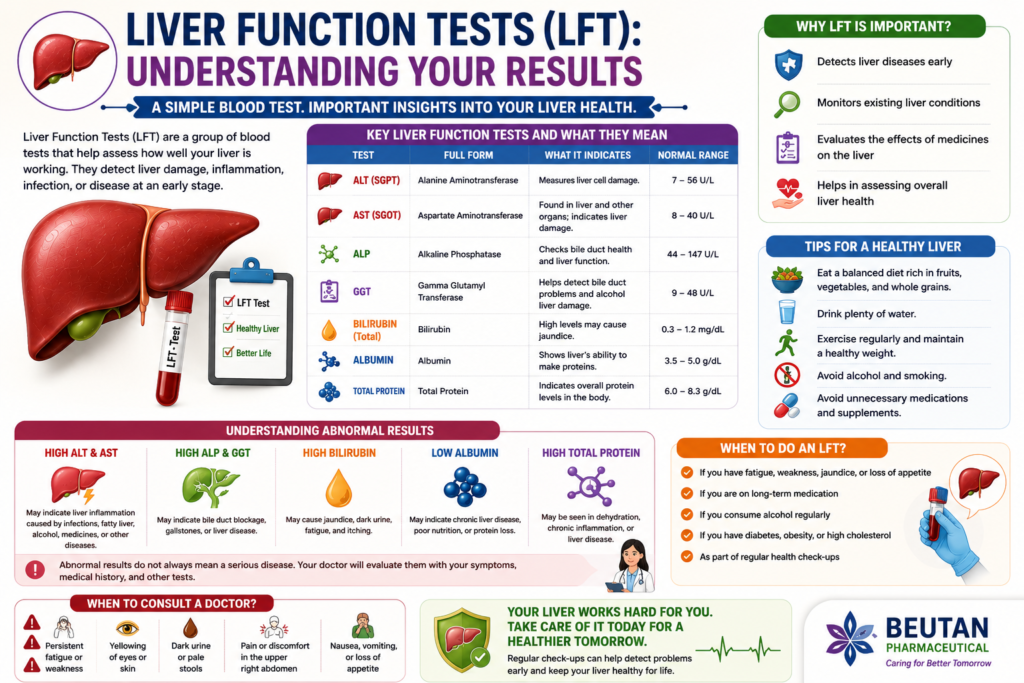
Alanine Aminotransferase (ALT)
ALT is an enzyme found primarily in liver cells.
When liver cells become damaged or inflamed, ALT levels may rise.
Elevated ALT May Be Associated With:
- Fatty liver disease
- Hepatitis
- Liver inflammation
- Medication-related liver injury
Because ALT is closely linked to liver tissue, it is often considered one of the most important indicators of liver cell damage.
Aspartate Aminotransferase (AST)
AST is another enzyme present in the liver as well as other tissues, including muscles and the heart.
Elevated AST levels may indicate:
- Liver injury
- Muscle damage
- Certain medical conditions affecting other organs
Doctors typically evaluate AST alongside ALT for a more complete picture.
Alkaline Phosphatase (ALP)
ALP is an enzyme associated with the liver, bile ducts, and bones.
High ALP levels may suggest:
- Bile duct obstruction
- Certain liver diseases
- Bone-related conditions
Additional testing is often required to determine the source of elevation.
Gamma-Glutamyl Transferase (GGT)
GGT is another enzyme that helps evaluate liver and bile duct health.
Elevated GGT levels may occur in:
- Liver disease
- Bile duct disorders
- Alcohol-related liver conditions
GGT is often used alongside ALP to help identify liver-related causes of abnormal results.
Bilirubin
Bilirubin is a yellow pigment produced during the breakdown of red blood cells.
The liver processes bilirubin and removes it from the body.
Elevated Bilirubin Levels May Cause:
- Yellowing of the skin
- Yellowing of the eyes
- Dark-colored urine
High bilirubin levels may indicate liver dysfunction or bile flow problems.
Albumin
Albumin is a protein produced by the liver.
It plays an important role in maintaining fluid balance and transporting substances throughout the bloodstream.
Low albumin levels may suggest:
- Chronic liver disease
- Nutritional issues
- Certain medical conditions
Total Protein
This measurement reflects the combined levels of albumin and other proteins in the blood.
Abnormal values may provide additional information about liver function and overall health.
What Do Normal Liver Function Test Results Mean?
Normal liver function test results generally indicate that the liver is functioning properly and that no significant liver injury is detected at the time of testing.
However, normal results do not always completely rule out every liver condition.
Healthcare providers interpret test results alongside:
- Symptoms
- Medical history
- Physical examination findings
- Additional diagnostic tests
Common Causes of Abnormal Liver Function Test Results
Abnormal LFT results do not automatically mean a person has serious liver disease.
Many factors can influence liver enzyme levels.
Fatty Liver Disease
One of the most common causes of elevated liver enzymes.
Fat accumulation within liver cells may lead to inflammation and abnormal blood test results.
Viral Hepatitis
Inflammation caused by viral infections can significantly affect liver enzymes.
Excessive Alcohol Consumption
Alcohol-related liver injury frequently results in abnormal liver function tests.
Certain Medications
Some prescription medications, supplements, and over-the-counter drugs may affect liver enzyme levels.
Obesity and Metabolic Syndrome
Metabolic health conditions are increasingly recognized as important contributors to liver abnormalities.
Bile Duct Disorders
Conditions affecting bile flow may influence bilirubin, ALP, and GGT levels.
Autoimmune Conditions
Some immune-related disorders can cause inflammation within the liver.
Can Liver Function Tests Detect All Liver Diseases?
While liver function tests are valuable diagnostic tools, they do have limitations.
An LFT provides important information about liver health but cannot always determine the exact cause of abnormal results.
Additional evaluations may sometimes be required, including:
- Imaging studies
- Specialized blood tests
- Further medical assessments
The interpretation of results should always be performed by a qualified healthcare professional.
How to Prepare for a Liver Function Test
Preparation requirements vary depending on the specific tests ordered.
General recommendations may include:
Follow Medical Instructions
Healthcare providers may advise specific preparations before testing.
Inform Your Doctor About Medications
Certain medications or supplements may affect results.
Stay Hydrated
Adequate hydration supports accurate blood sample collection.
Follow Fasting Instructions If Required
Some tests may require temporary fasting.
How to Support Healthy Liver Function
Maintaining liver health can help promote normal test results and overall wellness.
Maintain a Healthy Weight
Weight management supports liver function and metabolic health.
Eat a Balanced Diet
Focus on:
- Fruits
- Vegetables
- Whole grains
- Lean proteins
- Healthy fats
Stay Physically Active
Regular exercise supports overall liver wellness.
Limit Alcohol Consumption
Reducing alcohol intake can significantly benefit liver health.
Manage Chronic Health Conditions
Proper management of diabetes, cholesterol, and blood pressure can reduce liver-related risks.
When Should You Consider Liver Function Testing?
You may benefit from discussing liver testing with a healthcare provider if you have:
- Persistent fatigue
- Unexplained abdominal discomfort
- Risk factors for liver disease
- Diabetes or obesity
- A history of heavy alcohol use
- Exposure to viral hepatitis risk factors
Routine testing can often detect abnormalities before symptoms develop.
FAQs
A liver function test is a group of blood tests used to evaluate liver health, detect liver injury, and monitor liver-related conditions.
Doctors may recommend LFTs to investigate symptoms, monitor liver disease, assess medication effects, or evaluate overall liver health.
Yes. Fatty liver disease is one of the most common causes of elevated liver enzymes.
Not necessarily. Many factors can influence test results, and further evaluation may be needed to determine the underlying cause.
The frequency depends on individual health status, risk factors, and medical recommendations.