
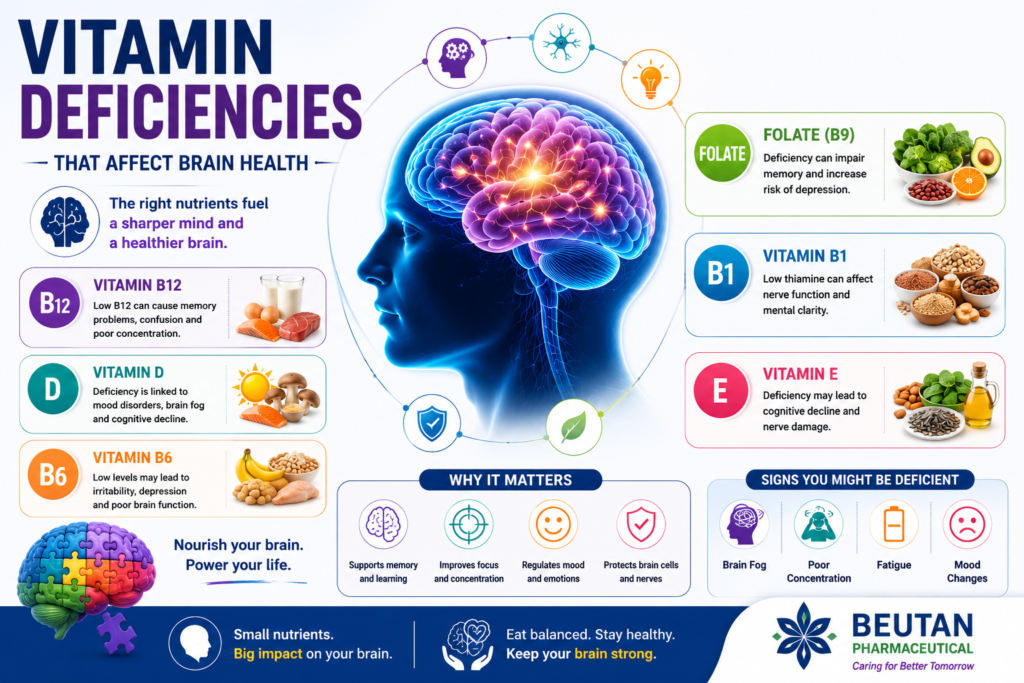
Vitamin Deficiencies That Affect Brain Health
The human brain is one of the most complex and energy-demanding organs in the body. It controls memory, learning, emotions, decision-making, movement, and countless other functions that are essential for daily life. While factors such as sleep, exercise, and stress management contribute to cognitive wellness, nutrition plays an equally important role in maintaining optimal brain function.
Many people focus on physical fitness while overlooking the nutrients required for a healthy brain. Deficiencies in certain vitamins can gradually affect memory, concentration, mood, and overall neurological health. In some cases, prolonged deficiencies may contribute to cognitive decline and nerve-related symptoms.
Understanding the role of vitamins for brain health can help individuals make informed dietary choices and support long-term cognitive well-being.
Why Vitamins Are Important for Brain Health
The brain requires a constant supply of nutrients to function efficiently. Vitamins support numerous neurological processes, including:
- Energy production
- Nerve signal transmission
- Neurotransmitter synthesis
- Memory formation
- Cognitive performance
- Protection against oxidative stress
When vitamin levels become inadequate, brain cells may struggle to perform these functions effectively.
Signs That a Vitamin Deficiency May Affect the Brain
Vitamin deficiencies often develop gradually, making symptoms easy to overlook.
Common warning signs may include:
- Difficulty concentrating
- Memory problems
- Mental fatigue
- Mood changes
- Brain fog
- Reduced alertness
- Numbness or tingling sensations
- Increased forgetfulness
While these symptoms can have multiple causes, nutritional deficiencies should not be ignored.
Key Vitamins for Brain Health
Several vitamins play a critical role in supporting healthy brain function and neurological wellness.
Vitamin B12: Essential for Nerve Function
Vitamin B12 is one of the most important nutrients for maintaining healthy nerves and cognitive performance.
It supports:
- Red blood cell production
- DNA synthesis
- Nerve protection
- Brain communication pathways
Symptoms of Vitamin B12 Deficiency
Low B12 levels may contribute to:
- Memory difficulties
- Confusion
- Fatigue
- Tingling in the hands and feet
- Difficulty concentrating
Older adults and individuals following strict vegetarian or vegan diets may be at greater risk of deficiency.
Food Sources of Vitamin B12
Good dietary sources include:
- Fish
- Eggs
- Dairy products
- Poultry
- Meat
Vitamin D and Brain Function
Vitamin D is commonly associated with bone health, but it also plays an important role in neurological function.
Research suggests that adequate vitamin D levels may support:
- Cognitive performance
- Mood regulation
- Brain cell communication
- Overall neurological health
Symptoms of Low Vitamin D
Potential symptoms include:
- Fatigue
- Low mood
- Difficulty concentrating
- General weakness
Sources of Vitamin D
Vitamin D can be obtained through:
- Sunlight exposure
- Fatty fish
- Fortified foods
- Dietary supplements when recommended
Vitamin B6 and Cognitive Health
Vitamin B6 contributes to the production of neurotransmitters that regulate communication between brain cells.
These neurotransmitters influence:
- Mood
- Memory
- Learning
- Attention
Signs of Deficiency
Low vitamin B6 levels may be associated with:
- Irritability
- Difficulty concentrating
- Mental fatigue
Dietary Sources
Vitamin B6 can be found in:
- Bananas
- Potatoes
- Poultry
- Fish
- Whole grains
Folate (Vitamin B9)
Folate plays an essential role in brain development and cognitive function.
It helps support:
- DNA production
- Cell growth
- Neurotransmitter function
Symptoms of Folate Deficiency
Insufficient folate may contribute to:
- Fatigue
- Poor concentration
- Mood changes
Food Sources
Folate-rich foods include:
- Leafy green vegetables
- Lentils
- Beans
- Citrus fruits
Vitamin E: Protecting Brain Cells
Vitamin E acts as a powerful antioxidant.
Antioxidants help protect brain cells from damage caused by free radicals and oxidative stress.
Benefits for Brain Health
Vitamin E may support:
- Healthy aging
- Cognitive function
- Cellular protection
Food Sources
Rich sources include:
- Almonds
- Sunflower seeds
- Spinach
- Avocados
Vitamin C and Cognitive Wellness
Vitamin C is another important antioxidant that supports overall brain health.
Its benefits include:
- Protection against oxidative damage
- Support for neurotransmitter production
- Immune system support
Sources of Vitamin C
Good sources include:
- Oranges
- Strawberries
- Kiwi
- Bell peppers
- Broccoli
Who Is at Higher Risk of Vitamin Deficiencies?
Certain individuals may be more likely to experience deficiencies affecting brain health.
Risk factors include:
Older Age
Nutrient absorption may decrease with age.
Restrictive Diets
Strict vegetarian or vegan diets may increase the risk of vitamin B12 deficiency if not carefully planned.
Digestive Disorders
Certain gastrointestinal conditions can interfere with nutrient absorption.
Chronic Illness
Long-term health conditions may affect nutritional status.
Poor Dietary Habits
Frequent consumption of highly processed foods may contribute to nutrient deficiencies.
How to Support Brain Health Through Nutrition
Maintaining healthy vitamin levels is one of the most effective ways to support cognitive function.
Eat a Balanced Diet
Focus on nutrient-dense foods such as:
- Fruits
- Vegetables
- Whole grains
- Lean proteins
- Healthy fats
Stay Hydrated
Proper hydration supports concentration and cognitive performance.
Include Brain-Friendly Foods
Consider foods such as:
- Fish
- Nuts
- Seeds
- Eggs
- Leafy greens
Avoid Excessive Processed Foods
Highly processed foods may provide calories without essential nutrients.
Attend Regular Health Checkups
Routine evaluations can help identify deficiencies before symptoms become severe.
When Should You Consult a Healthcare Professional?
Medical evaluation may be beneficial if you experience:
- Persistent fatigue
- Memory concerns
- Difficulty concentrating
- Mood changes
- Numbness or tingling
- Unexplained neurological symptoms
A healthcare professional can determine whether nutritional deficiencies or other factors may be contributing to symptoms.
FAQs
Vitamin B12 is considered one of the most important vitamins for maintaining healthy nerve function and cognitive performance.
Yes. Deficiencies in nutrients such as vitamin B12, folate, and vitamin D may contribute to memory difficulties and cognitive changes.
Research suggests that vitamin D supports cognitive function, mood regulation, and overall neurological health.
Foods rich in vitamins and healthy fats, including fish, eggs, nuts, seeds, fruits, and vegetables, support brain function.
A balanced diet that provides essential vitamins and minerals may help improve focus, energy levels, and cognitive performance.