
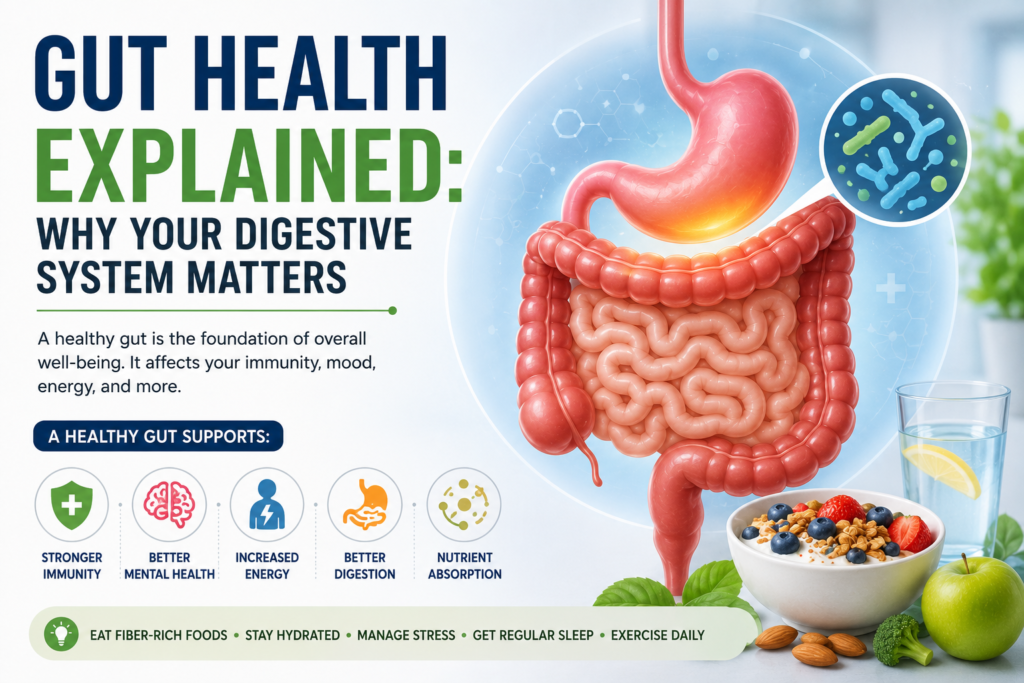
Why Your Digestive System Matters
When people think about health, they often focus on the heart, brain, muscles, or immune system. However, one of the most important contributors to overall well-being is often overlooked—the digestive system. The health of your gut influences much more than digestion. It can affect energy levels, immunity, nutrient absorption, mood, and even long-term health outcomes.
In recent years, scientific research has highlighted the strong connection between digestive health and overall wellness. A healthy gut supports the body’s ability to process nutrients, defend against harmful microorganisms, and maintain proper communication between different body systems.
Understanding how the digestive system works and taking steps to improve gut health can contribute significantly to better physical and mental well-being.
Understanding Gut Health
Gut health refers to the proper functioning and balance of the digestive system, particularly the gastrointestinal tract.
The digestive system is responsible for:
- Breaking down food
- Absorbing nutrients
- Eliminating waste
- Supporting immune function
- Maintaining microbial balance
A healthy digestive tract allows these processes to occur efficiently while helping protect the body from harmful substances.
When gut health becomes compromised, digestive discomfort and broader health issues may develop.
Why Gut Health Is Important
The digestive system does much more than simply process food.
A healthy gut contributes to:
Efficient Nutrient Absorption
The body relies on the digestive tract to absorb essential vitamins, minerals, proteins, fats, and carbohydrates.
Without proper digestion and absorption, nutritional deficiencies may occur.
Immune System Support
A significant portion of the body’s immune system is closely linked to the digestive tract.
A healthy gut helps the body recognize and respond to harmful microorganisms effectively.
Overall Wellness
Research continues to explore the relationship between gut health and various aspects of physical and emotional well-being.
Maintaining digestive balance supports the body’s ability to function optimally.
Role of Gut Microbiome
One of the most fascinating aspects of digestive health is the gut microbiome.
The gut microbiome consists of trillions of microorganisms that naturally live within the digestive tract.
These microorganisms include:
- Beneficial bacteria
- Fungi
- Viruses
- Other microscopic organisms
While the idea of bacteria in the body may sound concerning, many of these microorganisms play essential roles in maintaining health.
Functions of the Gut Microbiome
A healthy microbiome helps:
- Digest certain foods
- Produce beneficial compounds
- Support immune function
- Maintain intestinal balance
- Protect against harmful microbes
The diversity and balance of these microorganisms are important indicators of gut health.
Gut-Brain Connection
Scientists have discovered that the gut and brain communicate through a complex network often referred to as the gut-brain axis.
This connection helps explain why digestive health may influence:
- Mood
- Stress responses
- Emotional well-being
Although research is ongoing, maintaining a healthy digestive system appears to benefit multiple aspects of health.
Signs of Poor Gut Health
Digestive imbalances may present with a variety of symptoms.
Recognizing potential warning signs can encourage early lifestyle adjustments and medical evaluation when necessary.
Frequent Bloating
Occasional bloating is common, but persistent bloating may indicate digestive imbalance.
Gas and Digestive Discomfort
Excessive gas or ongoing digestive discomfort may signal issues within the digestive tract.
Irregular Bowel Habits
Changes in bowel patterns, including constipation or diarrhea, can sometimes reflect poor gut health.
Food Sensitivities
Some individuals notice increased sensitivity to certain foods when digestive balance is disrupted.
Fatigue
Digestive health may influence nutrient absorption and overall energy levels.
Persistent fatigue can occasionally be associated with underlying digestive concerns.
Difficulty Maintaining Wellness
Because the digestive system supports immune function, poor gut health may affect overall resilience.
Factors That Can Affect Gut Health
Several lifestyle and environmental factors influence the digestive system.
Poor Dietary Habits
Highly processed foods and inadequate nutrient intake may negatively affect gut balance.
Chronic Stress
Stress can influence digestive function and alter gut microbial balance.
Lack of Physical Activity
Regular movement supports healthy digestion and overall well-being.
Inadequate Sleep
Sleep plays an important role in supporting multiple bodily systems, including digestive health.
Certain Medications
Some medications may affect the balance of microorganisms within the digestive tract.
Foods That Improve Gut Health
Diet is one of the most effective ways to support digestive wellness.
Including a variety of nutrient-rich foods can help improve gut health and maintain microbial balance.
Fruits and Vegetables
Fruits and vegetables provide:
- Fiber
- Vitamins
- Minerals
- Antioxidants
Fiber serves as an important fuel source for beneficial gut bacteria.
Examples include:
- Apples
- Berries
- Bananas
- Spinach
- Broccoli
Whole Grains
Whole grains contain dietary fiber that supports healthy digestion.
Examples include:
- Oats
- Brown rice
- Whole wheat
- Quinoa
Legumes
Beans, lentils, and chickpeas are rich in fiber and other beneficial nutrients.
Nuts and Seeds
Nuts and seeds provide healthy fats and additional fiber that may support digestive health.
Fermented Foods
Certain fermented foods contain beneficial microorganisms that may contribute to microbial diversity.
Examples include:
- Yogurt
- Kefir
- Sauerkraut
- Kimchi
Probiotics and Prebiotics
Probiotics and prebiotics are frequently discussed in relation to digestive health.
Although they sound similar, they serve different purposes.
What Are Probiotics?
Probiotics are beneficial microorganisms that may support a healthy microbial balance within the digestive system.
They are found in certain fermented foods and dietary products.
What Are Prebiotics?
Prebiotics are types of fiber that serve as food for beneficial gut bacteria.
They help nourish and support microbial growth.
Sources include:
- Garlic
- Onions
- Bananas
- Asparagus
- Whole grains
Why Both Matter
Probiotics introduce beneficial microorganisms, while prebiotics help those microorganisms thrive.
Together, they contribute to a healthy digestive environment.
Lifestyle Habits That Support Gut Health
In addition to nutrition, several daily habits can help improve digestive wellness.
Stay Hydrated
Adequate hydration supports digestion and bowel regularity.
Exercise Regularly
Physical activity encourages healthy digestive function and overall health.
Manage Stress
Stress management techniques such as:
- Meditation
- Yoga
- Deep breathing exercises
may support digestive balance.
Prioritize Sleep
Consistent, high-quality sleep benefits many aspects of health, including digestion.
When Should You See a Doctor?
Consult a healthcare professional if you experience:
- Persistent abdominal pain
- Chronic bloating
- Ongoing constipation
- Frequent diarrhea
- Unexplained weight loss
- Significant changes in bowel habits
Early evaluation helps identify potential underlying causes and ensures appropriate care.
FAQs
Gut health refers to the proper functioning and balance of the digestive system and its microorganisms.
A balanced diet, regular exercise, adequate hydration, quality sleep, and stress management can help support digestive health.
Fruits, vegetables, whole grains, legumes, fermented foods, nuts, and seeds are commonly associated with healthy digestion.
Probiotics are beneficial microorganisms that may help support microbial balance within the digestive tract.
Prebiotics provide nourishment for beneficial gut bacteria and help maintain a healthy digestive environment.