
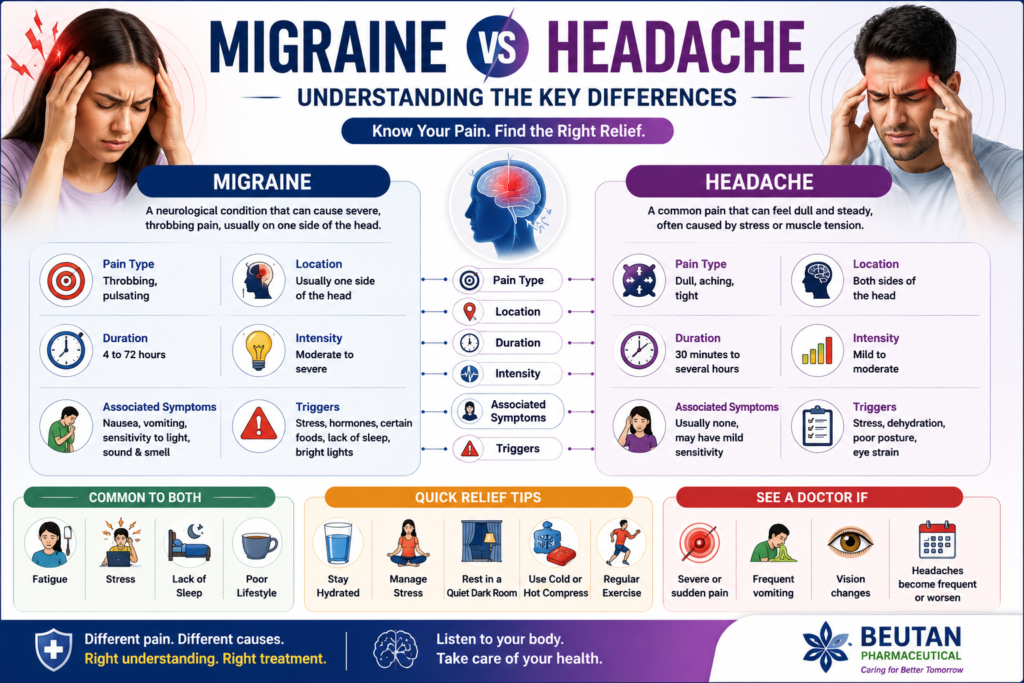
Migraine vs Headache: Understanding the Key Differences
Most people have experienced a headache at some point in their lives. While headaches are common and usually temporary, migraines are often misunderstood and mistaken for ordinary headaches. However, migraines are much more than just severe headaches. They are a complex neurological condition that can significantly impact daily life, work productivity, and overall well-being.
Understanding the difference between a migraine and a headache is important because the causes, symptoms, and migraine treatment approaches can vary considerably. Early recognition and proper management can help reduce the frequency and severity of migraine attacks and improve quality of life.
In this guide, we’ll explore the key differences between migraines and headaches, their symptoms, triggers, diagnosis, and available treatment options.
What Is a Headache?
A headache refers to pain or discomfort in the head, scalp, or neck region. Headaches can range from mild to severe and may last from a few minutes to several hours.
Most headaches are not linked to serious medical conditions and often occur due to temporary factors such as stress, dehydration, lack of sleep, or eye strain.
Common Types of Headaches
Tension Headaches
Tension headaches are the most common type of headache.
Symptoms may include:
- Mild to moderate pain
- Pressure around the forehead
- Tightness in the scalp
- Neck and shoulder discomfort
Sinus Headaches
These headaches are associated with sinus inflammation and congestion.
Common symptoms include:
- Facial pressure
- Nasal congestion
- Pain around the eyes and cheeks
Cluster Headaches
Cluster headaches are less common but extremely painful.
Symptoms often include:
- Intense pain around one eye
- Watery eyes
- Nasal congestion
- Restlessness
What Is a Migraine?
A migraine is a neurological disorder characterized by recurring attacks that often involve severe head pain along with other symptoms.
Unlike ordinary headaches, migraines can affect multiple body systems and may interfere with daily activities for hours or even days.
Migraine attacks often occur in episodes and may vary in frequency from person to person.
Migraine vs Headache: Key Differences
Although migraines and headaches both involve head pain, several important differences distinguish them.
Pain Intensity
Headache
- Mild to moderate pain
- Often manageable with rest
Migraine
- Moderate to severe pain
- Can significantly disrupt daily activities
Pain Location
Headache
- Often affects both sides of the head
- Feels like pressure or tightness
Migraine
- Frequently affects one side of the head
- Can shift sides during an attack
Nature of Pain
Headache
- Dull or pressing pain
Migraine
- Pulsating or throbbing pain
- Often worsens with movement
Associated Symptoms
Ordinary headaches usually involve only head pain.
Migraines often include additional symptoms such as:
- Nausea
- Vomiting
- Sensitivity to light
- Sensitivity to sound
- Sensitivity to odors
- Dizziness
Duration
Headache
- Typically lasts a few hours
Migraine
- May last from 4 hours to 72 hours or longer
Common Symptoms of Migraine
Migraine symptoms extend beyond head pain.
Throbbing Head Pain
Most migraine sufferers experience moderate to severe throbbing pain.
Sensitivity to Light
Bright lights often worsen migraine symptoms.
Sensitivity to Sound
Even normal sounds may feel overwhelming during an attack.
Nausea and Vomiting
Digestive symptoms commonly accompany migraines.
Blurred Vision
Some individuals experience visual disturbances before or during a migraine.
Fatigue
Migraine attacks may leave individuals feeling exhausted even after symptoms improve.
What Is Migraine Aura?
Some people experience a phenomenon known as aura before a migraine attack.
Migraine aura may include:
- Flashing lights
- Blind spots
- Zigzag patterns
- Tingling sensations
- Temporary speech difficulties
Aura symptoms usually develop gradually and disappear before the headache phase begins.
Not all migraine sufferers experience aura.
Common Migraine Triggers
Identifying triggers is an important part of migraine management.
Stress
Emotional stress is one of the most frequently reported migraine triggers.
Lack of Sleep
Insufficient or irregular sleep patterns can increase migraine risk.
Hormonal Changes
Hormonal fluctuations may contribute to migraines, particularly in women.
Certain Foods
Some individuals report migraines after consuming specific foods or beverages.
Dehydration
Inadequate fluid intake can trigger migraine attacks.
Bright Lights
Strong sunlight, flashing lights, or prolonged screen exposure may provoke symptoms.
Strong Odors
Perfumes, chemicals, and smoke may trigger migraines in sensitive individuals.
Risk Factors for Migraines
Certain factors may increase susceptibility to migraines.
Family History
Migraines often run in families.
Gender
Women are more likely to experience migraines than men.
Age
Migraines commonly begin during adolescence or early adulthood.
Stressful Lifestyle
High stress levels may increase attack frequency.
How Are Migraines Diagnosed?
There is no single test that confirms migraines.
Healthcare providers typically diagnose migraines based on:
- Medical history
- Symptom patterns
- Frequency of attacks
- Neurological evaluation
Additional testing may be recommended to rule out other conditions if symptoms are unusual or severe.
Migraine Treatment Options
The goal of migraine treatment is to reduce symptoms, prevent attacks, and improve quality of life.
Treatment plans vary depending on symptom severity, attack frequency, and individual health needs.
Lifestyle Modifications
Healthy lifestyle habits can play an important role in migraine management.
Maintain a Consistent Sleep Schedule
Regular sleep patterns may help reduce migraine frequency.
Stay Hydrated
Adequate hydration supports overall neurological health.
Manage Stress
Stress management techniques may include:
- Meditation
- Deep breathing exercises
- Yoga
- Relaxation practices
Regular Physical Activity
Moderate exercise may help reduce migraine frequency for some individuals.
Trigger Management
Keeping a migraine diary can help identify potential triggers.
Recording factors such as:
- Food intake
- Sleep patterns
- Stress levels
- Environmental exposures
may assist in preventing future attacks.
Medical Management
Healthcare providers may recommend treatment approaches aimed at:
- Relieving acute symptoms
- Reducing attack frequency
- Preventing chronic migraines
Treatment decisions should always be individualized and guided by a qualified healthcare professional.
When Should You Seek Medical Attention?
Medical evaluation is important if you experience:
- Frequent migraines
- Severe headache pain
- Sudden changes in symptoms
- Neurological symptoms
- Headaches that interfere with daily life
Prompt assessment helps ensure accurate diagnosis and appropriate management.
Tips for Living with Migraines
Managing migraines often requires a long-term approach.
Helpful habits include:
- Following a regular daily routine
- Getting sufficient sleep
- Staying hydrated
- Eating balanced meals
- Managing stress effectively
- Attending regular medical checkups
Consistent lifestyle practices may help reduce the burden of migraine attacks.
FAQs
Yes. Migraines are generally more severe and often include symptoms such as nausea, vomiting, and sensitivity to light or sound.
Migraine attacks may last anywhere from 4 to 72 hours, depending on the individual and severity.
Yes. Stress is one of the most common migraine triggers.
Family history is a significant risk factor, and migraines often run in families.
Seek medical advice if migraines become frequent, severe, interfere with daily activities, or if symptoms suddenly change.