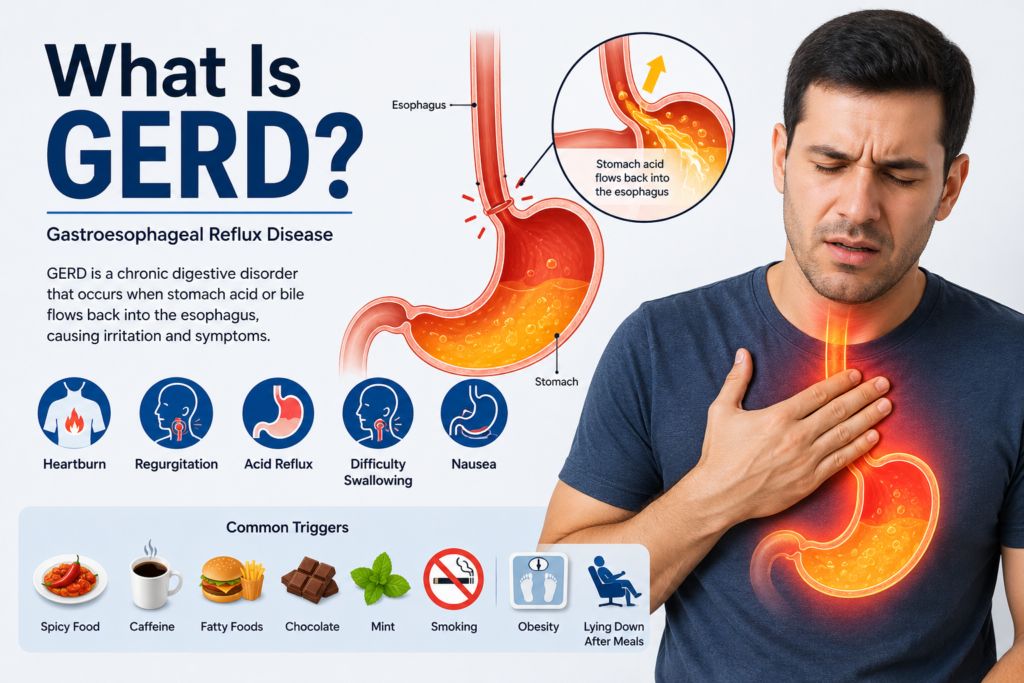
Gastroesophageal Reflux Disease (GERD) is a chronic digestive condition in which stomach acid repeatedly flows back into the esophagus, the tube that connects the mouth to the stomach.
Normally, a muscular ring called the lower esophageal sphincter (LES) acts as a barrier between the stomach and esophagus. When this valve weakens or relaxes inappropriately, stomach contents may travel upward, causing irritation and inflammation.
Occasional reflux is common, but GERD is typically diagnosed when symptoms occur frequently or begin affecting quality of life.
How Acid Reflux Differs from GERD
Many people use the terms acid reflux and GERD interchangeably, but they are not exactly the same.
Acid Reflux
Acid reflux refers to the occasional backward flow of stomach acid into the esophagus.
GERD
GERD is a long-term condition characterized by recurring acid reflux symptoms that require ongoing management.
Persistent reflux can damage the lining of the esophagus and contribute to complications if left untreated.
Common Symptoms
GERD symptoms can vary from person to person. Some individuals experience mild discomfort, while others may have symptoms that significantly impact daily activities.
Heartburn
Heartburn is the most common symptom of GERD.
It often feels like:
- A burning sensation in the chest
- Discomfort behind the breastbone
- Burning that worsens after meals
Symptoms may become more noticeable when lying down or bending over.
Acid Regurgitation
Some individuals experience a sour or bitter taste in the mouth caused by stomach contents moving upward into the throat.
Chest Discomfort
GERD-related chest discomfort may sometimes be mistaken for heart-related issues.
Any severe or unusual chest pain should always be evaluated by a healthcare professional.
Difficulty Swallowing
Ongoing irritation of the esophagus may lead to swallowing difficulties in some cases.
Chronic Cough
A persistent cough, especially at night, can sometimes be associated with acid reflux.
Hoarseness
Repeated exposure of the throat to stomach acid may affect the voice and cause hoarseness.
Sore Throat
Frequent throat irritation may occur in individuals with chronic reflux.
Sleep Disturbances
Many people find that symptoms worsen at night, affecting sleep quality and overall well-being.
Causes and Risk Factors
Several factors may contribute to the development of GERD.
Weak Lower Esophageal Sphincter
A weakened LES is one of the primary causes of reflux.
When this muscle does not function properly, stomach acid can move into the esophagus more easily.
Obesity
Excess body weight increases pressure within the abdomen, which may promote reflux.
Pregnancy
Hormonal changes and increased abdominal pressure during pregnancy can contribute to reflux symptoms.
Certain Dietary Habits
Some foods and beverages may trigger symptoms in susceptible individuals.
Common triggers include:
- Fatty foods
- Fried foods
- Spicy meals
- Chocolate
- Carbonated beverages
- Caffeinated drinks
Smoking
Smoking may weaken the lower esophageal sphincter and increase reflux risk.
Large Meals
Overeating can place additional pressure on the stomach and increase the likelihood of reflux.
Lying Down After Eating
Reclining shortly after meals can make it easier for stomach contents to flow backward.
Hiatal Hernia
This condition can affect the normal functioning of the lower esophageal sphincter and increase reflux symptoms.
Diagnosis Methods
Proper diagnosis helps determine whether symptoms are caused by GERD or another digestive condition.
Medical History
Healthcare providers often begin by reviewing:
- Symptoms
- Duration of symptoms
- Lifestyle habits
- Dietary patterns
- Medical history
Physical Examination
A physical examination may help identify contributing factors and rule out other conditions.
Symptom Evaluation
The frequency and severity of symptoms provide valuable diagnostic information.
Specialized Testing
In some situations, healthcare providers may recommend additional evaluations to assess the esophagus and digestive system more thoroughly.
These tests help confirm the diagnosis and identify potential complications.
Treatment Options
The primary goal of GERD treatment is to reduce symptoms, prevent complications, and improve quality of life.
Treatment plans vary depending on symptom severity and individual health needs.
Medical Management
Healthcare professionals may recommend treatment strategies aimed at:
- Reducing acid exposure
- Protecting the esophagus
- Improving symptom control
Treatment decisions should always be individualized and supervised by qualified medical professionals.
Symptom Monitoring
Keeping track of symptoms can help identify patterns and potential triggers.
A symptom diary may include:
- Foods consumed
- Meal timing
- Symptom frequency
- Lifestyle habits
This information may help guide treatment and management decisions.
Lifestyle Changes
Lifestyle modifications are often an important component of GERD management.
Maintain a Healthy Weight
Weight management can help reduce abdominal pressure and improve reflux symptoms.
Eat Smaller Meals
Smaller, more frequent meals may reduce pressure on the stomach.
Avoiding overeating can help minimize reflux episodes.
Avoid Late-Night Eating
Try to avoid eating large meals shortly before bedtime.
Allowing time for digestion may help reduce nighttime symptoms.
Stay Upright After Meals
Remaining upright for several hours after eating can help prevent acid from moving into the esophagus.
Identify Personal Trigger Foods
Although triggers vary between individuals, monitoring food intake can help identify patterns associated with symptoms.
Quit Smoking
Smoking cessation supports both digestive health and overall well-being.
Limit Alcohol Consumption
Alcohol may worsen reflux symptoms in some individuals.
Improve Sleep Position
Elevating the head during sleep may help reduce nighttime reflux.
Potential Complications of Untreated GERD
Without proper management, chronic GERD may contribute to:
- Esophageal irritation
- Difficulty swallowing
- Chronic throat symptoms
- Sleep disturbances
- Reduced quality of life
Early diagnosis and treatment can help reduce the risk of complications.
When Should You See a Doctor?
Medical evaluation is recommended if you experience:
- Frequent heartburn
- Persistent reflux symptoms
- Difficulty swallowing
- Chronic cough
- Unexplained chest discomfort
- Symptoms affecting sleep or daily activities
Prompt assessment helps ensure appropriate diagnosis and care.
FAQs
GERD, or Gastroesophageal Reflux Disease, is a chronic condition in which stomach acid repeatedly flows into the esophagus.
Heartburn is the most commonly reported symptom.
Yes. Weight management, dietary adjustments, avoiding late-night meals, and other healthy habits may help reduce symptoms.
No. Occasional acid reflux is common, whereas GERD involves recurring symptoms that may require ongoing management.
Medical evaluation is recommended if symptoms occur frequently, affect daily activities, interfere with sleep, or cause difficulty swallowing.